

Liver Health in Dogs & Cats: Raised Enzymes, St Mary’s Thistle & Gentle Daily Support
Raised liver enzymes can sound frightening. But an abnormal blood result is a clue—not a diagnosis. The next step is to understand why the liver is under pressure, support the whole animal and follow the trend with your veterinarian.
I created our Liver Support to make traditional herbal care practical: one focused herbal active, a small measured liquid dose and no wrestling with tablets or clouds of powder.
Explore Liver Support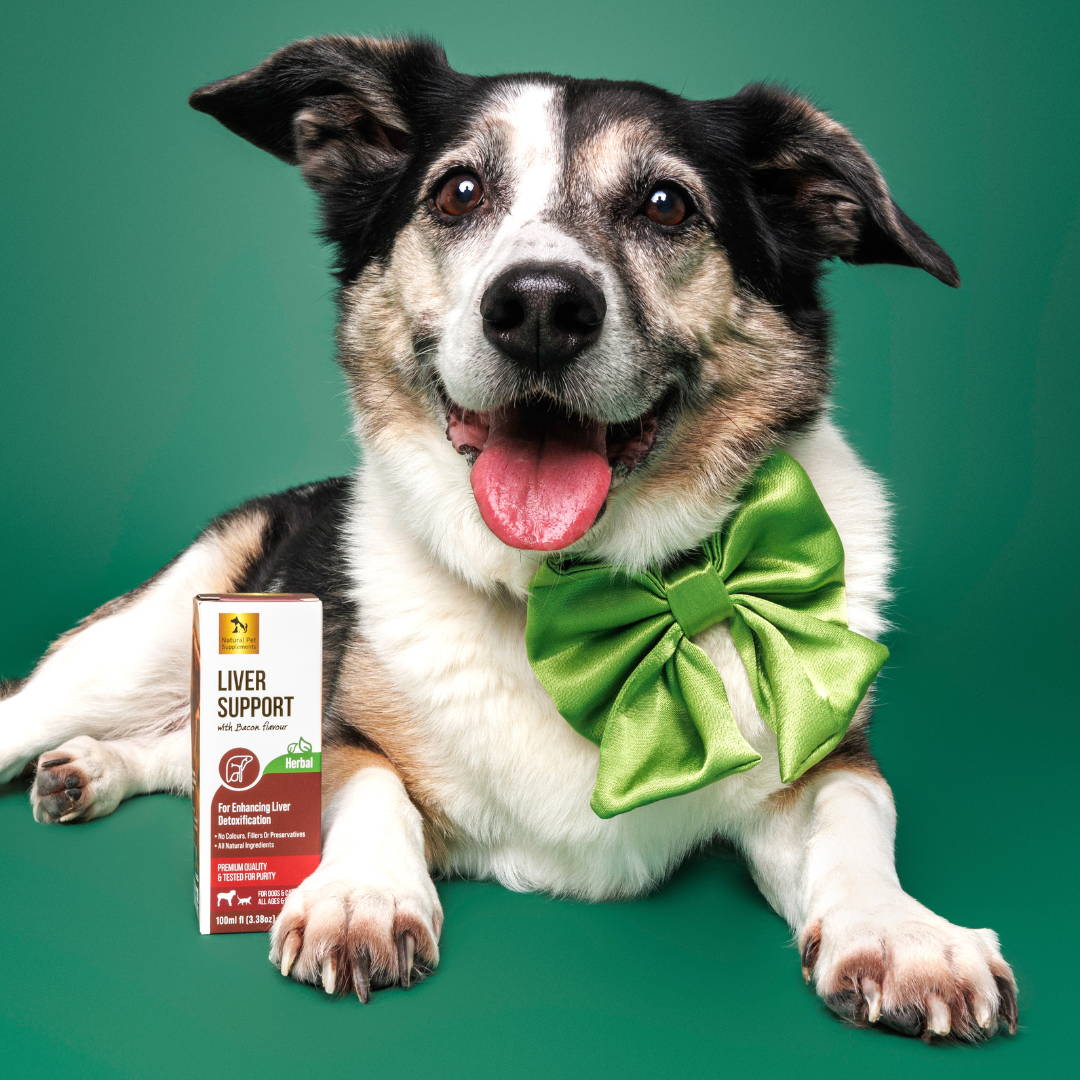
What do raised liver enzymes actually mean?
Liver enzymes are signposts. They may tell us that liver cells are irritated, bile flow is affected or an enzyme has been induced by a medication or hormone—but they do not, by themselves, tell us that the liver is failing.
Enzymes show activity
ALT, AST, ALP and GGT give your vet different pieces of information. The pattern, how high each result is and whether values are rising or falling matter more than one isolated number.
Function needs a wider picture
Bilirubin, bile acids, albumin, glucose, cholesterol, urea and clotting tests—along with symptoms and imaging—can help your vet understand how well the liver is doing its many jobs.
Why might a dog or cat have raised liver enzymes?
Steroids and Cushing’s
Dogs can produce a glucocorticoid-induced form of ALP. Prednisone, prednisolone and naturally high cortisol in Cushing’s disease can therefore raise ALP, sometimes substantially. Cats respond differently and do not have the same canine steroid-induced ALP form.
Long-term medication
Anticonvulsants such as phenobarbital and a range of other medicines can alter liver enzymes. That does not mean you should stop a necessary medicine. It means the prescribing vet should monitor the pet and interpret the change.
Liver or gallbladder disease
Inflammation, infection, impaired bile flow, copper-associated disease, nodules, tumours and congenital problems may all change blood results. They need proper investigation rather than guesswork.
Another health condition
Pancreatic, intestinal, endocrine and metabolic conditions can affect the liver. In cats, hyperthyroidism commonly raises ALP; in dogs, diabetes and Cushing’s are among the possibilities.
Toxins or accidental exposure
Human medicines, poisonous plants, blue-green algae, mould toxins and some foods can cause urgent liver injury. Never give human pain relief to a pet unless a veterinarian has specifically prescribed it.
A temporary or individual change
Age, growth, breed and a recent illness can influence results. Some dogs have persistently higher ALP without the number matching the severity of liver changes, which is why context matters.
When do pet parents usually consider Liver Support?
- When a routine blood test shows raised liver enzymes and their veterinarian is investigating or monitoring the cause.
- For a pet taking ongoing medication, including steroids, anti-inflammatories or anticonvulsants, after checking compatibility with the treating vet.
- Alongside a veterinary plan for Cushing’s disease, chronic illness or age-related metabolic strain.
- When a dog or cat needs a simple antioxidant-rich herbal addition that can be measured accurately and mixed into food.
- For pets who are extremely difficult to tablet or who refuse a strong-smelling powder.
- When a pet parent wants to move away from an ultra-processed, biscuit-heavy routine and build a more nourishing whole-animal plan.
Why I chose St Mary’s Thistle
A respected Western liver herb with centuries of traditional use
St Mary’s Thistle has a long history in traditional Western herbal medicine as a liver and biliary herb. The seed and fruit have traditionally been used when the liver is under strain, digestion feels sluggish and the body needs help with its normal processing and elimination work.
I chose it because its traditional purpose and its modern phytochemistry point in the same direction. Its best-known group of natural plant compounds is called silymarin; within that group, silybin is the component most often studied.
Antioxidant support
Silymarin compounds have been studied for their ability to help neutralise oxidative stress and support the liver’s own antioxidant defences.
Cellular resilience
Research explores how silymarin interacts with liver-cell membranes and pathways involved in inflammation and tissue stress.
Normal liver function
That makes it a thoughtful daily herb for supporting normal liver metabolism, waste processing and healthy liver-cell function.
Dog- and cat-specific research on St Mary’s Thistle
The veterinary evidence is encouraging, but it is smaller than the human research base. I believe in sharing both the promising findings and the limits.
Improved liver markers in a canine pilot study
A 2021 study tested pure silybin and a commercial silybin-containing liver product. In healthy dogs, supplementation did not adversely affect nutrient digestibility. Liver markers fell in the supplemented groups. In a separate small group of 15 dogs with idiopathic liver disorders, the commercial product was associated with lower ALT, AST and liver-specific miR-122 after 28 days.
The honest detail: the affected-dog arm was a small pilot without liver biopsy, and the product was a combination formula. It supports interest in silybin; it does not prove that every dog or every liver condition will respond in the same way.
Protective findings in an experimental feline model
In a small 2010 study of 20 cats, researchers compared silymarin and N-acetylcysteine in an acetaminophen toxicity model. Cats receiving silymarin with or shortly after acetaminophen did not show the same rise in measured liver enzymes and bilirubin as the acetaminophen-only group.
The honest detail: this was an experimental poisoning study, not a clinical trial of everyday feline liver disease. It must never be read as permission to give acetaminophen to a cat—it is highly dangerous and suspected exposure is an emergency.
Older experimental work and laboratory studies also explore antioxidant, anti-inflammatory and cell-protective pathways. Together, they help explain why modern veterinary herbalists remain interested in a herb that traditional practitioners have valued for generations.
Liver health is not identical in dogs and cats
| Question | Dogs | Cats |
|---|---|---|
| Can steroids raise liver enzymes? | Yes. Dogs have a glucocorticoid-induced ALP isoenzyme, so steroids and Cushing’s can cause a pronounced ALP rise. | Cats do not have the same steroid-induced ALP form. A change should be interpreted using feline reference ranges and the whole clinical picture. |
| What species-specific problems matter? | Copper-associated hepatopathy, chronic hepatitis, endocrine disease, medication induction and gallbladder disease are among the considerations. | Hepatic lipidosis, cholangitis, hyperthyroidism, pancreatitis and intestinal disease are especially important differentials. |
| Is refusing food urgent? | Poor appetite always deserves attention, especially with vomiting, weakness or jaundice. | Yes—particularly in an overweight cat. Cats can develop potentially life-threatening hepatic lipidosis after sustained inadequate food intake. Never fast a cat into eating a new diet. |
| Does one raised result diagnose liver disease? | No. ALP is sensitive but not very specific in dogs. | No. Feline enzyme patterns and magnitudes behave differently, so cat-specific interpretation is essential. |
Why our liquid Liver Support makes sense
Our formula is centred on St Mary’s Thistle as its single herbal active, in an alcohol-free vegetable glycerine base with natural vegan bacon flavour. It is high-strength and low-dose, Australian made and created for dogs and cats.
- No large tablet to hide, split or repeatedly retrieve from the floor.
- No scoop of powder changing the smell and texture of the whole meal.
- A calibrated dropper makes a weight-based amount simple to measure.
- The small liquid serve is easy to mix evenly through food.
- One focused herbal active keeps the formula clear and purposeful.
How to use: Shake well before use. Mix the measured amount into food according to the product label directions.
View Liver Support & dosage calculatorHow long can one 100 mL bottle last?
At the standard product-label dose of one drop per kilogram, twice daily, and the current 100 mL price of $69.95, the approximate value looks like this:
| Pet’s weight | Approx. daily liquid | Approx. bottle duration | Approx. daily cost |
|---|---|---|---|
| 5 kg | 0.5 mL | 200 days | $0.35 |
| 10 kg | 1 mL | 100 days | $0.70 |
| 20 kg | 2 mL | 50 days | $1.40 |
That is why I consider this particularly cost-effective for cats and small-to-medium dogs. Many liver tablets are sold in short packs and may require one or more pills every day; powders can need a full scoop and may be wasted when food is refused. A precise liquid helps reduce both the daily struggle and the product left behind in the bowl.
Figures are approximate, based on the listed 100 mL price and standard label directions in August 2026. Use the current product calculator for your pet’s exact weight and current price.
My holistic liver-health foundations
1. Build meals around moisture and fresh food
Where appropriate, I prefer a complete and balanced fresh, lightly cooked or quality wet-food diet over a biscuit-dominated bowl. Fresh food provides moisture and can make herbal liquid easy to mix through. Transition slowly and make sure the total diet is nutritionally complete.
2. Do not guess at protein restriction
Many pets with raised enzymes do not need a low-protein diet. Protein amount and type should match the diagnosis, symptoms and blood work. Growing animals, seniors and cats can be harmed by indiscriminate restriction.
3. Keep weight changes gentle
A healthy body condition supports metabolic health, but crash dieting is never the answer. This is especially important for cats, who must not be allowed to stop eating during a diet change.
4. Review the complete medication list
Give your vet a list of prescriptions, preventatives, supplements and treats. Never stop steroids suddenly, and never change anticonvulsants or other essential medicines without veterinary direction.
5. Reduce avoidable exposure
Store human medicine securely, prevent access to mouldy food and toxic plants, avoid blue-green algae and use garden chemicals carefully. Keep necessary parasite prevention—just choose it with your veterinarian according to your pet’s real risk.
6. Recheck, do not simply hope
Repeat blood tests at the interval your vet recommends. A symptom diary covering appetite, thirst, stool, vomiting, energy, weight and medication changes can make the next consultation far more useful.
Dogs and cats are already making it part of mealtime
“This product is great, noticeable improved liver enzyme blood results in a relatively short time. It has been wonderful for my dog and being a liquid it is easy to add the correct amount to food.”
— Kylee Delios“The liver herbs are working well for my 14 year old cat Lily in conjunction with the kidney herbs. She hasn't been on the liver herbs long, about two weeks. She's doing well on them. I'm happy with her progress. There is a way to go but she is doing well. Thank you Erin. Much appreciated.”
— Karen LLiver health FAQs for dogs and cats
Can steroids raise liver enzymes in dogs?
Yes. Dogs produce a glucocorticoid-induced ALP isoenzyme, so prednisone, prednisolone and Cushing’s disease can raise ALP. The degree of elevation does not always match the degree of liver damage. Do not stop a steroid suddenly—ask the prescribing vet how they want to monitor the result.
Can steroids raise liver enzymes in cats?
Cats do not have the same steroid-induced ALP isoenzyme as dogs and their liver responds differently. Any rise needs feline-specific interpretation, particularly if there is poor appetite, weight loss, vomiting, jaundice, diabetes or another illness.
Is St Mary’s Thistle the same as Milk Thistle?
Yes. Both common names refer to Silybum marianum. Silymarin is the name used for a group of naturally occurring flavonolignans in the plant; silybin is the best-studied component of that group.
Is Milk Thistle safe for dogs and cats?
It is generally considered well tolerated at an appropriate dose, but “natural” does not mean suitable in every situation. Our Liver Support requires caution with blood-thinning and anticonvulsant medication, diabetes and gallbladder inflammation, and it should be stopped before anaesthesia according to veterinary advice. Always check the product label and your vet’s instructions.
How quickly should liver enzymes improve?
There is no universal timeline because the cause, severity, diet, medication and individual animal all matter. The useful measure is a planned blood-test trend, not a promise of a particular result by a particular day. Keep prescribed treatment in place and recheck when your veterinarian advises.
What should I feed a dog or cat with raised liver enzymes?
Raised enzymes alone do not tell us which therapeutic diet is needed. In general, choose moisture-rich, complete and balanced food made from recognisable ingredients and avoid relying only on biscuits. A diagnosed condition—such as copper-associated disease, hepatic encephalopathy or feline hepatic lipidosis—needs a condition-specific veterinary nutrition plan.
Can my pet take Liver Support with medication?
Often a supplement is used alongside veterinary care, but compatibility depends on the exact medicine and health condition. Caution is required with blood thinners and anticonvulsants, and steroids must never be stopped abruptly. Give your veterinarian the full product label before combining treatments.
Why choose a liquid instead of a pill or powder?
Consistency matters. A calibrated liquid makes it easy to measure a small weight-based amount and mix it evenly into food. That can be far less stressful for pets who spit out tablets or refuse a meal once they smell a large scoop of powder.
When your pet needs veterinary attention
Seek prompt veterinary care for yellow eyes or gums, collapse, severe weakness, repeated vomiting, a swollen or painful abdomen, very dark urine, pale or grey stool, unusual bleeding, confusion, seizures, suspected toxin exposure, or a cat who is not eating. Liver Support is intended to support normal wellbeing and does not diagnose, treat or cure liver disease. Use only according to the current label; check first if your pet takes blood-thinning or anticonvulsant medication, has diabetes or gallbladder inflammation, or is having an anaesthetic or procedure.
Sources
- Gogulski M, et al. Effects of silybin supplementation on nutrient digestibility and liver function indices in dogs. BMC Veterinary Research. 2021.
- Avizeh R, et al. Prophylactic and therapeutic effects of silymarin and N-acetylcysteine in acetaminophen-induced hepatotoxicity in cats. Journal of Veterinary Pharmacology and Therapeutics. 2010.
- MSD Veterinary Manual. Enzyme Activity in Hepatic Disease in Small Animals.
- MSD Veterinary Manual. Feline Hepatic Lipidosis.
- Natural Pet Supplements Australia. Liver Support product information, directions, cautions and reviews.


