

Kidney Disease in Cats: Signs, Diet and Holistic Support
Written by Erin Follington, Small Animal Naturopath
Being told that your cat has kidney disease can feel overwhelming. Cats are masters at hiding when they feel unwell, so the diagnosis may come after you have noticed only small changes—an untouched meal, a little weight loss, more water disappearing from the bowl or larger clumps in the litter tray.
The reassuring part is that there is a great deal you can do to support a cat with kidney disease. The best plan is not built around one miracle food, herb or medicine. It brings together veterinary monitoring, hydration, a kidney-appropriate diet, gentle herbal support and close attention to the small details that tell you how your cat is really feeling.
In this guide, I will explain the signs of kidney disease in cats, the tests your veterinarian may recommend, what I prefer to feed, why I do not recommend ordinary dry biscuits as the foundation of a kidney diet, and how our Kidney Support and Kidney Support Kit can fit into a complete holistic routine.
THE SHORT ANSWER
A cat with kidney disease needs ongoing veterinary care, unrestricted access to fresh water and a complete diet suited to their individual kidney values. I generally prefer a properly balanced, moisture-rich fresh or wet diet over meals based mainly on dry biscuits. Herbal formulas can provide additional whole-body support alongside this plan.
What do a cat’s kidneys actually do?
The kidneys are much more than filters. Every day, they help your cat:
- Remove metabolic waste from the blood
- Balance water and electrolytes
- Maintain the body’s acid–base balance
- Regulate blood pressure
- Conserve useful nutrients and excrete substances the body does not need
- Support red blood cell production through the hormone erythropoietin
- Help activate vitamin D and maintain normal mineral balance
Cats evolved to obtain much of their moisture from prey, and they often have a naturally low thirst drive. When the kidneys lose some of their ability to concentrate urine, a cat can lose more water through the litter tray than their drinking habits comfortably replace. This is why hydration and food moisture matter so much.
Why is kidney disease so common in older cats?
Chronic kidney disease becomes increasingly common as cats age. Kidney tissue has considerable reserve capacity, so changes can develop quietly before obvious symptoms appear. Ageing, inherited conditions, previous kidney injury, high blood pressure, infection, inflammation, stones or obstruction may all contribute, although an exact cause is not always found.
This is why I encourage routine blood tests, urinalysis, weight checks and blood-pressure monitoring for senior cats—even when they seem well. Early changes are generally easier to support than a crisis discovered after a cat has stopped eating or become dehydrated.
Chronic kidney disease or an acute kidney injury?
Chronic kidney disease (CKD) develops over time and is most common in mature and senior cats. The aim is to protect remaining kidney function, manage complications and keep the cat comfortable, eating and enjoying life.
Acute kidney injury (AKI) happens suddenly. Possible causes include toxins, severe dehydration, infection, heat injury, urinary obstruction and reactions to some medicines. AKI is an emergency and can sometimes improve substantially when the cause is identified and treated quickly.
IMPORTANT: DO NOT WAIT AND SEE
Seek urgent veterinary help if your cat is straining but passing little or no urine, repeatedly vomiting, cannot keep water down, is extremely weak, collapses, has seizures or may have contacted a lily, antifreeze, human medication or another toxin. Every part of a true lily—including petals, leaves, pollen and vase water—can be dangerous to cats.
Common signs of kidney disease in cats
The signs vary with the cause and stage of disease. Early changes can be easy to miss.
| What you may notice | What to do |
|---|---|
| Drinking more, visiting the litter tray more often or producing larger urine clumps | Book a veterinary check; never restrict water. |
| Eating less, sniffing food then walking away, lip licking or drooling | Contact your veterinarian promptly. Nausea and mouth discomfort can often be treated. |
| Weight loss, muscle loss, weakness or an unkempt coat | Arrange an examination, blood and urine tests, and a nutrition review. |
| Vomiting, constipation, bad breath or mouth ulcers | Seek same-day advice, especially if eating or drinking has reduced. |
| Straining, crying in the tray or passing very little urine | Emergency veterinary assessment—particularly in male cats. |
These signs are not unique to kidney disease. Diabetes, hyperthyroidism, liver disease, urinary obstruction, infection and several other conditions can look similar. Testing matters because the correct treatment can be very different.
How is kidney disease diagnosed and monitored?
A single high result does not always tell the whole story. Dehydration, muscle mass, thyroid disease and other health problems can affect kidney markers. Your veterinarian may use a combination of:
- Creatinine and SDMA to help assess filtration
- Urea, phosphorus, calcium, potassium and bicarbonate to assess waste, mineral and acid–base balance
- Urine specific gravity to see how well the kidneys concentrate urine
- Urine protein-to-creatinine ratio (UPC) to assess persistent protein loss
- Urine culture when infection is possible
- Blood pressure, because hypertension can accompany kidney disease and affect the eyes, brain, heart and kidneys
- Imaging when stones, infection, obstruction, polycystic disease or structural changes may be involved
- Red blood cell measurements, because progressing kidney disease can contribute to anaemia
The International Renal Interest Society (IRIS) stages stable CKD using creatinine and SDMA, then substages cats according to proteinuria and blood pressure. Treatment is tailored to the individual cat and adjusted as their needs change. You can read the current 2026 IRIS treatment recommendations for cats here.
CAT-PARENT TIP
Weigh your cat weekly on the same baby or pet scale and record appetite, vomiting, water intake and litter-tray changes. A small loss of weight or muscle can be one of the earliest clues that the plan needs adjusting.
What is the best diet for a cat with kidney disease?
There is no single kidney diet that suits every cat. The right food depends on IRIS stage, phosphorus and potassium levels, protein loss, blood pressure, appetite, muscle condition and any other illnesses.
A good kidney-supportive diet generally focuses on five things:
- Controlled phosphorus. This is one of the most important dietary considerations in established CKD.
- Enough high-quality, digestible animal protein. Cats are obligate carnivores. The goal is not to strip protein away until muscle disappears; it is to provide an appropriate amount while controlling phosphorus.
- Plenty of moisture. Wet or fresh meals help add water to a cat’s day without relying on thirst alone.
- Adequate calories and palatability. The food must be something the cat will willingly eat.
- Complete feline nutrition. Taurine, arginine, essential fatty acids, vitamins and minerals must be correctly balanced.
Renal diets have meaningful evidence behind them. A recent study of 1,430 cats with early CKD associated veterinary therapeutic renal diets with slower disease progression and longer survival. That is important: “fresh” does not automatically mean kidney-appropriate, and a diet is only helpful when its total nutrient profile suits the cat.
Read the 2026 feline renal-diet study.
Why I prefer moisture-rich fresh or wet food to ordinary biscuits
For many cats, I prefer a properly formulated fresh, lightly cooked or complete wet diet because it naturally provides more water, is often easier to tempt a fussy cat with and can be tailored to current blood results.
I do not recommend ordinary dry biscuits as the foundation of a cat’s kidney diet. Biscuits contain very little moisture, and a standard adult formula may provide more phosphorus or an unsuitable mineral balance for that individual cat. Cats are not naturally enthusiastic drinkers, so expecting them to compensate for a dry diet at the water bowl is not my preferred approach.
A veterinary renal biscuit is different from an ordinary maintenance biscuit: it is specifically formulated for CKD and may be a useful evidence-based option, particularly if it is the only renal food a cat accepts. If used, offer wet renal food as well where possible, and ask your veterinarian whether the dry portion can be softened with warm water.
MY FRESH-FOOD RULE
Fresh food must be complete, feline-appropriate and balanced for kidney disease. Chicken breast, tuna or mince alone is not a complete cat diet. Homemade recipes can be deficient in taurine, calcium, essential fats, vitamins and trace minerals while still being far too high in phosphorus.
Foods that may be used in a balanced fresh kidney plan
Depending on your cat’s results and the recipe created for them, a kidney-appropriate fresh diet may use carefully measured amounts of:
- Cooked egg white
- Selected cooked muscle meats
- Selected oily fish in controlled amounts
- Kidney-appropriate animal fats and omega-3 oils
- A precisely measured calcium source
- Taurine and other feline essentials
- Small amounts of suitable fibre where needed
- A veterinary-formulated vitamin and mineral balancer
The exact quantities matter. If you want to home-cook, ask your veterinarian for a referral to a veterinary nutritionist or another suitably qualified professional who can formulate the recipe from your cat’s latest blood and urine results.
Foods to limit or discuss first
A cat with CKD may need to limit high-phosphorus foods such as bones, large amounts of organ meat, dried meat treats, cheese, excessive fish and unbalanced all-meat diets. Be careful with salty processed foods and human broths containing onion or garlic.
Please do not restrict protein, potassium or sodium blindly. Some cats have low potassium; others do not. Some are already losing significant muscle. Diet decisions should respond to the cat’s actual results and body condition.
Simple ways to increase moisture
- Offer complete wet, fresh or lightly cooked meals.
- Add a little warm water to food, increasing gradually so the cat still accepts it.
- Keep several wide, clean water bowls away from litter trays.
- Try glass, ceramic and stainless-steel bowls to learn your cat’s preference.
- Use a pet fountain if your cat enjoys moving water.
- Place water in quiet locations where another pet cannot block access.
- Ask your veterinarian whether a suitable unsalted, onion-free broth is appropriate.
- Never restrict water.
WHEN A CAT STOPS EATING
Do not let the pursuit of a “perfect” kidney diet result in your cat eating almost nothing. Cats can become dangerously unwell when they stop eating, and nausea, dehydration, mouth discomfort and constipation may need treatment. Contact your veterinarian promptly if appetite drops rather than waiting for your cat to become visibly thin.
Why I created Kidney Support
I created Kidney Support to provide gentle, targeted herbal support for cats whose kidneys, urinary system and overall vitality need extra care.
My goal was never to chase one blood-test number with one herb. I wanted a balanced formula that could sit within a whole-cat plan—supporting normal kidney and urinary function, fluid balance, appetite, energy and resilience over time.
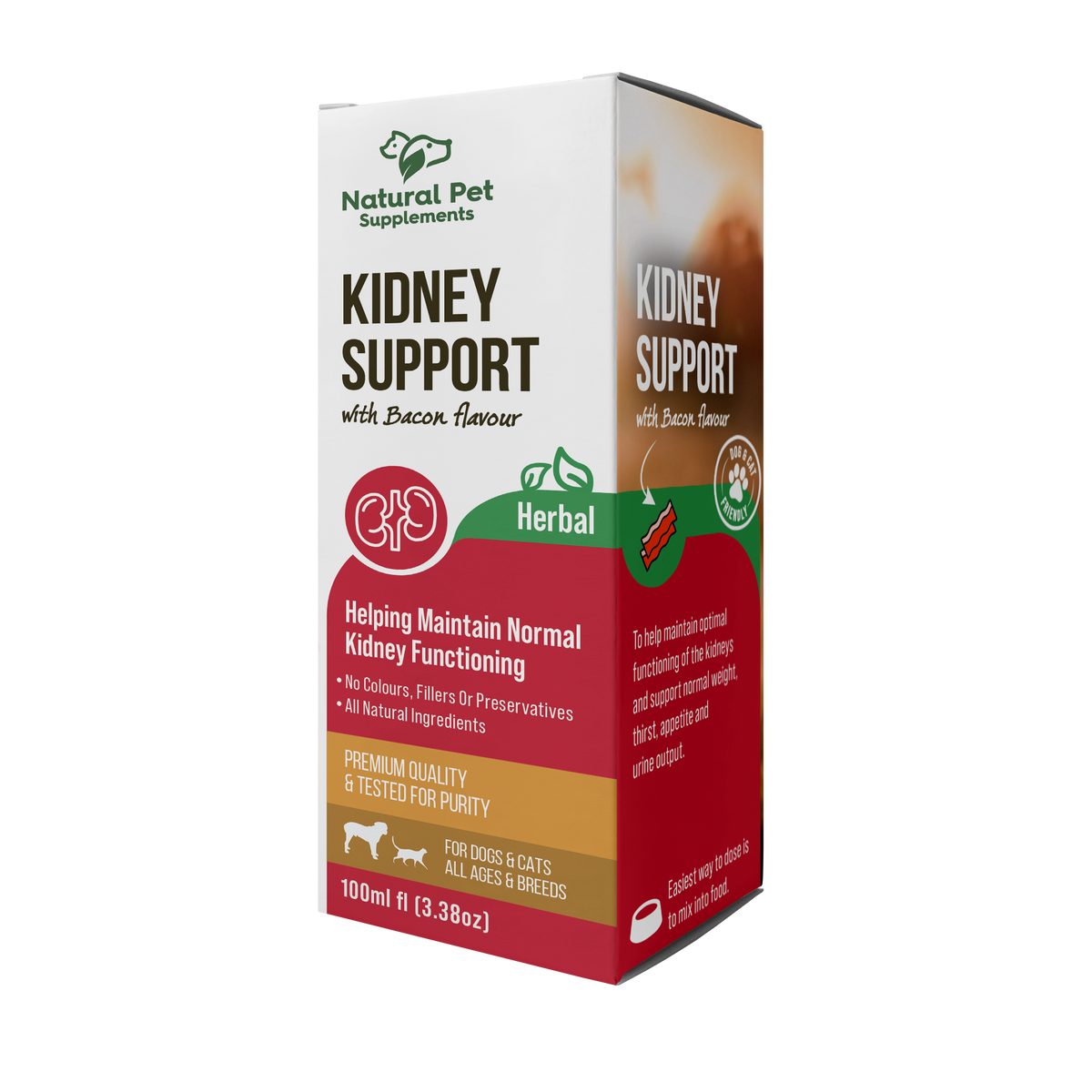
Kidney Support
A high-strength, low-dose liquid herbal formula with Rehmannia root, Cordyceps, Astragalus root and Marshmallow root.
- Supports healthy kidney and urinary function
- Supports normal fluid balance and waste elimination
- Supports energy, appetite and general vitality
- Australian made with human-grade herbs
- Easy to mix into a small amount of favourite wet food
Why the Kidney Support Kit also includes Liver Support
The kidneys and liver have different jobs, but they work within the same larger system. The liver processes nutrients, hormones, medicines and many compounds circulating in the blood. The kidneys regulate fluids and electrolytes and help excrete water-soluble waste products.
I pair the formulas to provide broader support for healthy liver-cell function, antioxidant defences, normal metabolism and the organs involved in processing and eliminating waste. For an older cat or a cat needing a more complete whole-body approach, supporting both organs makes good practical sense.
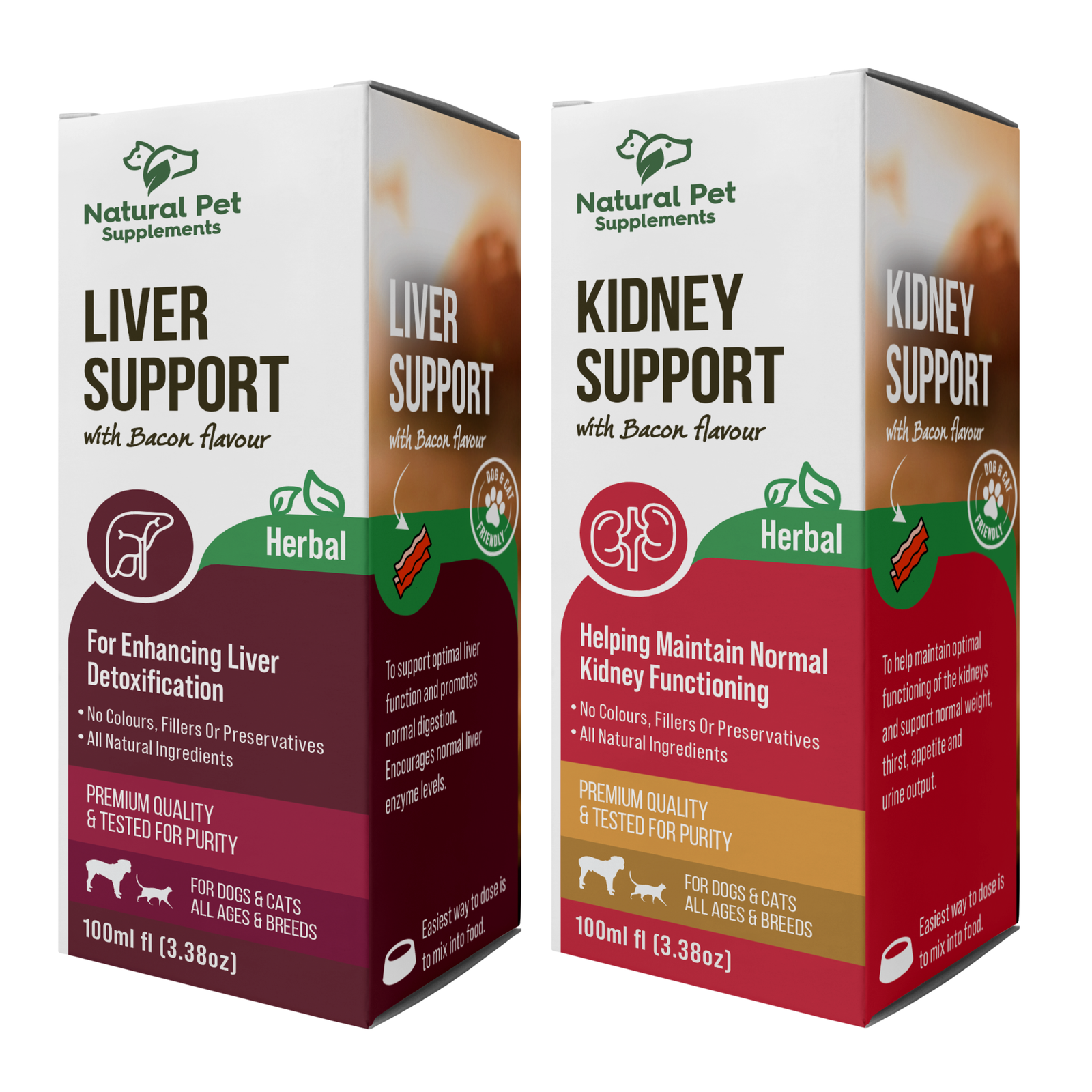
Kidney Support Kit
Kidney Support provides targeted kidney, urinary and vitality support.
Liver Support supplies standardised St Mary’s Thistle, providing 25 mg of silymarin per 1 mL, to support healthy liver-cell function, metabolism and antioxidant activity.
Two complementary formulas. One simple daily routine.
View the Kidney Support KitWHICH ONE SHOULD I CHOOSE?
Choose Kidney Support when you want focused daily herbal support for the kidneys, urinary system, appetite and vitality.
Choose the Kidney Support Kit when you want the more complete kidney-and-liver approach, particularly for an older cat or one needing broader metabolic and antioxidant support.
Ancient herbal wisdom behind Kidney Support
This formula was not created from a passing trend. Its foundation comes from Traditional Chinese Medicine—a complete system of herbal practice refined over thousands of years through careful observation of patterns, constitution, ageing and the relationships between organ systems.
In Chinese medicine, the Kidney system is associated not only with urination, but with the body’s deep reserves, healthy ageing, vitality and the management of fluids. Traditional formulas therefore combine herbs with different but complementary roles: some nourish, some strengthen, some support resilience and some protect and soothe.
Rehmannia, Cordyceps and Astragalus form the Chinese herbal heart of Kidney Support. Marshmallow root brings the soothing wisdom of Western herbal medicine, while the Kidney Support Kit adds St Mary’s Thistle for traditional liver and metabolic support.
WHY TRADITIONAL USE MATTERS
Published research is valuable, but it is only one part of herbal knowledge. These herbs were selected because their long traditional use, their actions within the whole formula and my experience as a Small Animal Naturopath all point in the same direction. Modern studies help us understand possible mechanisms; traditional medicine explains why the herbs belong together.
Rehmannia root (Rehmannia glutinosa)
Known as Di Huang, Rehmannia is one of the great kidney herbs of Traditional Chinese Medicine and has been used for centuries within a medical tradition extending back thousands of years.
Traditionally, Rehmannia is used to nourish the Kidney system, replenish Jing or vital essence, support healthy fluids and help maintain the deep reserves associated with strength, vitality and healthy ageing. This makes it especially relevant for an older cat that appears depleted, loses body condition or needs long-term kidney support.
Why I added it: Rehmannia is the nourishing foundation of Kidney Support. I chose it to support normal kidney function, healthy fluid balance, kidney-cell resilience and the vitality that can decline when the kidneys are under strain.
Modern research has identified compounds in Rehmannia—including catalpol—and investigated their antioxidant, healthy inflammatory-response and kidney tissue-supportive activity. Explore the research.
Cordyceps (Cordyceps sinensis)
Known traditionally as Dong Chong Xia Cao, Cordyceps is a highly valued medicinal fungus used in Chinese medicine to strengthen both the Kidney and Lung systems, nourish vital essence and support energy, stamina and recovery.
It has traditionally been selected when the body appears tired, weak or depleted—exactly the type of whole-body loss of vitality that families often notice in an older cat needing kidney support.
Why I added it: I chose Cordyceps to support kidney vitality while also helping maintain energy, appetite, immune resilience and healthy ageing. It gives the formula a restorative quality rather than focusing only on urinary function.
Modern research has investigated Cordyceps for antioxidant activity, immune regulation, normal filtration support and its influence on pathways involved in kidney-cell health. Explore the research.
Astragalus root (Astragalus membranaceus)
Astragalus, or Huang Qi, is one of the most important Qi tonics in Traditional Chinese Medicine. It has been used for more than 2,000 years to strengthen vitality, reinforce the body’s natural defences and support the healthy movement and transformation of fluids.
Traditionally, Astragalus is chosen when there is weakness, poor recovery or a need for greater resilience. In kidney-focused herbal practice, it is often paired with other tonic herbs because it supports energy and immune function while helping the body maintain normal fluid and urinary processes.
Why I added it: I chose Astragalus to strengthen the formula, support normal kidney filtration and protein balance, and help maintain immunity, appetite and energy. It works particularly well beside the nourishing Rehmannia and restorative Cordyceps.
Modern research has explored Astragalus and its astragalosides for antioxidant, inflammatory-response, renal circulation and kidney tissue-supportive activity. Explore the research.
Marshmallow root (Althaea officinalis)
Marshmallow root comes from Western herbal medicine, where it has been valued since ancient Greek times for its gentle, cooling and soothing qualities. Its name comes from the Greek word altho, meaning “to heal.”
The root is naturally rich in mucilage—a soft, slippery plant fibre traditionally used to coat and soothe delicate tissues. Herbalists have long selected it for the urinary and digestive tracts when comfort, moisture and protection are needed.
Why I added it: I chose Marshmallow root to provide gentle soothing support for the urinary tract and balance the deeper tonic action of the Chinese herbs. It helps make Kidney Support a rounded formula for the kidneys and the tissues through which urine passes.
Modern research has also examined Marshmallow’s mucilage, antioxidant activity and support for a healthy inflammatory response. Explore the research.
St Mary’s Thistle (Silybum marianum)
St Mary’s Thistle has been used in Western herbal medicine for more than 2,000 years and is one of the most respected herbs for liver support. Its seeds and fruit contain the naturally occurring silymarin complex, valued for supporting liver-cell membranes, antioxidant defences, normal liver repair and healthy metabolism.
The liver and kidneys work as a team. The liver processes nutrients, hormones, medicines and environmental compounds, while the kidneys filter the blood, regulate fluids and help remove many waste products. Supporting the liver therefore forms an important part of a broader plan for a cat whose kidneys are already working hard.
Why I added it to the Kidney Support Kit: Liver Support provides a standardised 25 mg of silymarin per 1 mL. I chose it to support healthy liver-cell function, normal metabolism and antioxidant protection, giving the Kidney Support Kit a more complete kidney-and-liver approach.
Modern companion-animal research continues to investigate St Mary’s Thistle for liver support, antioxidant protection and support during increased metabolic demands. Explore the research.
How the five herbs work together
I do not formulate by looking for one herb to “fix” one laboratory number. I formulate in the traditional way: by considering the role of each herb, the way the herbs strengthen and balance one another, and the whole cat in front of us.
Kidney Support brings together nourishment, strength, vitality, fluid balance and urinary comfort. The Kidney Support Kit then adds targeted liver and antioxidant support. This is why the combination is more purposeful than simply using a single kidney herb on its own.
| Formula role | Herbs contributing |
|---|---|
| Traditional kidney-tonic foundation | Rehmannia, Cordyceps and Astragalus |
| Antioxidant and healthy inflammatory-response support | Rehmannia, Cordyceps, Astragalus and St Mary’s Thistle |
| Soothing urinary-tract support | Marshmallow root |
| Energy and whole-body resilience | Cordyceps and Astragalus |
| Liver-cell and metabolic support | Standardised St Mary’s Thistle in the Kidney Support Kit |
WHY A BLEND?
The purpose is not to pile five herbs on top of one another. It is to combine complementary traditional actions—kidney nourishment, urinary soothing, antioxidant protection, vitality and liver support—within one consistent whole-cat plan.
Real cats, real experiences
These reviews come from real families using Kidney Support and the Kidney Support Kit with their cats. They describe the changes their families noticed in appetite, weight, vomiting, urinary comfort and everyday wellbeing.


How to use Kidney Support as part of a holistic routine
- Keep your cat under ongoing veterinary care and ask which IRIS stage, blood-pressure substage and proteinuria category applies.
- Feed a complete kidney-appropriate diet based on current blood and urine results.
- Prioritise fresh, wet or lightly cooked meals and provide clean water at all times.
- Give Kidney Support or the Kidney Support Kit consistently according to the current product directions.
- For fussy cats, mix the dose into a teaspoon of favourite wet food first; once eaten, offer the rest of the meal.
- Administer the formulas at least one hour away from pharmaceutical medication.
- Track appetite, weekly weight, water intake, urine clumps, vomiting, constipation and energy.
- Repeat blood tests, urine tests and blood-pressure checks at the interval recommended by your veterinarian.
SAFETY FIRST
Do not use these formulas with blood-thinning medication. The Kidney Support Kit also requires caution with anti-convulsant medication, diabetes and gall-bladder inflammation. Administer at least one hour away from pharmaceutical medicines and discontinue herbal supplements before surgery or anaesthesia as directed by your veterinarian.
Frequently asked questions
Can kidney disease in cats be reversed?
Chronic kidney disease usually involves permanent loss of functioning kidney tissue and is managed rather than cured. Some acute kidney injuries can improve significantly when treated quickly, and abnormal values caused or worsened by dehydration, infection or obstruction may also improve. Keep monitoring even when results become more stable.
How long can a cat live with kidney disease?
There is no single timeframe. Stage at diagnosis, the cause, phosphorus control, protein loss, blood pressure, appetite, hydration, muscle condition and response to treatment all matter. Cats diagnosed earlier and managed consistently may enjoy good quality of life for a meaningful period.
Should cats with kidney disease eat low protein?
Cats need the right amount of digestible, high-quality animal protein—not automatically as little as possible. Excessive restriction can worsen muscle loss and poor nutrition, while an uncontrolled high-meat or high-bone diet may supply too much phosphorus. The correct level depends on stage, appetite, body condition and proteinuria.
Is raw food good for cats with kidney disease?
A carefully formulated fresh diet may be useful, but an ordinary high-meat or high-bone raw diet can be far too high in phosphorus and may not be complete. Raw feeding also introduces food-safety risks for a medically vulnerable cat and for people in the household. I prefer a properly balanced lightly cooked recipe designed for the cat’s current kidney results.
What if my cat will only eat biscuits?
Do not suddenly remove the only food your cat accepts. Start by offering a suitable wet option beside familiar food, warm it slightly and transition slowly. A veterinary renal biscuit is preferable to an ordinary maintenance biscuit when dry food remains necessary. The immediate priority is keeping your cat eating while you and your veterinarian work toward a more moisture-rich plan.
Can my cat use Kidney Support with veterinary treatment?
Kidney Support can form part of a veterinary-led plan, but suitability depends on the complete medication and health picture. Follow the current product cautions, give it at least one hour away from medicines and check with your veterinarian when your cat takes blood thinners, anticonvulsants or several prescription products.
How quickly should I expect a change?
Every cat is different. A family may notice changes in appetite, brightness or comfort before laboratory trends, but consistency matters and no exact timeline can be guaranteed. Kidney health should be assessed with veterinary examinations and repeat testing as well as what you observe at home.
The whole-cat approach
I do not believe every cat needs the same plan. Cats are wonderfully individual, particularly when food and medication are involved.
One cat may need urgent fluids and nausea control. Another may feel well but need better phosphorus management. A third may be losing weight and need a more palatable moisture-rich diet before anything else can work.
The strongest plan brings natural support and veterinary medicine together. It protects hydration, makes nutrition practical, addresses nausea and blood pressure when needed, monitors real changes and supports the cat—not just the numbers on a pathology report.
Support the kidneys. Support the liver. Support the whole cat.
Explore targeted Kidney Support or choose the complete Kidney Support Kit for complementary kidney and liver support.
General information only: This article does not diagnose or treat disease and is not a substitute for veterinary care. Kidney disease can become serious quickly. Always seek veterinary advice for new symptoms, worsening symptoms, medication decisions, diet formulation and ongoing monitoring. Individual results may vary.


