

Hyperthyroidism in Cats: Signs, Diet and Herbal Support
Written by Erin Follington, Small Animal Naturopath
Has your older cat suddenly become ravenously hungry but continued to lose weight? Perhaps they are pacing at night, calling out more often, drinking constantly or simply seem as though their little body is running too fast.
A diagnosis of feline hyperthyroidism can feel frightening, particularly when your cat is already in their senior years. The good news is that hyperthyroidism is a condition we can actively support. The right plan should look beyond a single thyroid number and care for the whole cat—their heart, nervous system, liver, kidneys, digestion, muscle condition and quality of life.
Herbal medicine can play a meaningful role in that plan. I created Hyperthyroid Support to combine direct thyroid-balancing herbs with traditional heart, liver, adrenal and nervous-system support. It is a thoughtful formula for the cat in front of us—not just the number on the pathology report.
THE SHORT ANSWER
Hyperthyroidism means the thyroid gland is producing too much thyroid hormone, speeding up the cat’s metabolism and placing extra strain on the heart and other organs. Diagnosis and repeat blood testing are essential. A holistic plan can combine veterinary monitoring, moisture-rich fresh food, a calm home routine and targeted herbal medicine to support thyroid balance and help the cat feel calmer, stronger and more comfortable.
What is hyperthyroidism in cats?
The thyroid glands sit in the neck and produce hormones that regulate metabolism. When a cat becomes hyperthyroid, one or both glands produce excessive thyroid hormone—most noticeably thyroxine, or T4. It is as though the body’s accelerator has become stuck down.
The cat burns through energy too quickly. Their heart may beat faster, their digestive system speeds up, their muscles are broken down for fuel and their nervous system can remain in a constant state of overstimulation. This explains why a cat may eat an enormous amount yet become thinner, restless and increasingly fragile.
Feline hyperthyroidism is most often diagnosed in middle-aged and senior cats. In most cases, it is caused by benign overactive thyroid tissue, although veterinary testing is needed to confirm the diagnosis and assess how the rest of the body is coping.
Common signs of hyperthyroidism in cats
Early signs can be mistaken for “normal ageing,” or even interpreted as a senior cat becoming unusually energetic. The most common changes include:
| What you may notice | Why it can happen |
|---|---|
| Weight loss despite a large appetite | The accelerated metabolism burns energy and muscle faster than the cat can replace it. |
| Increased thirst and urination | Higher metabolic demand and concurrent kidney changes may affect fluid balance. |
| Restlessness, irritability or night-time vocalising | Excess thyroid hormone can overstimulate the nervous system. |
| Rapid heartbeat, panting or breathlessness | The heart is being asked to work harder and faster. |
| Vomiting, diarrhoea or frequent stools | The digestive system may also be moving too quickly. |
| Greasy, matted or unkempt coat | Poor body condition, altered metabolism and reduced grooming can affect coat quality. |
| Weakness or sudden lethargy | Some cats become depleted rather than visibly hyperactive, particularly as the condition progresses. |
WHEN TO SEEK URGENT HELP
Seek prompt veterinary care if your cat has open-mouth breathing, collapses, cannot settle, suddenly becomes very weak, stops eating, repeatedly vomits, appears blind or disoriented, or has a racing or irregular heartbeat. Hyperthyroidism can place substantial strain on the heart and blood pressure.
Which blood tests diagnose and monitor feline hyperthyroidism?
Most cats are diagnosed through their clinical signs, a veterinary examination and an elevated total T4 result. Your veterinarian may feel an enlarged thyroid gland in the neck and will usually check heart rate, blood pressure and body condition.
Testing may include:
- Total T4: the main screening and monitoring test for feline hyperthyroidism.
- Free T4: sometimes added when total T4 is high-normal or results do not match the clinical picture.
- TSH: may help when results are borderline or when monitoring for an underactive thyroid after treatment.
- Full blood count and biochemistry: to assess the liver, kidneys, electrolytes, glucose and overall health.
- Urinalysis: to assess urine concentration and identify concurrent urinary or kidney concerns.
- Blood pressure: because hypertension can affect the eyes, kidneys, heart and brain.
- Heart assessment: when a murmur, very fast heart rate, abnormal rhythm or breathing change is present.
A normal T4 does not always rule hyperthyroidism out when the signs are convincing. Thyroid levels can fluctuate and other illness may temporarily suppress T4. Your veterinarian may repeat the test or add free T4, TSH or imaging. Cornell’s feline thyroid laboratory explains the role of T4, free T4, T3 and TSH testing here.
ERIN’S TIP: KEEP EVERY RESULT
Ask for a copy of every blood test and record the date, T4, kidney values, liver enzymes, weight, heart rate and blood pressure. One number is a snapshot; a series of results shows the direction your cat is travelling.
Why the kidneys must be monitored too
Hyperthyroidism increases blood flow through the kidneys and can make kidney filtration appear better than it really is. As thyroid activity returns toward normal, previously hidden kidney disease can become more visible on blood and urine tests. This does not mean supporting the thyroid has damaged the kidneys; it means the overactive thyroid may have been masking reduced kidney reserve.
This is why I never look at T4 in isolation. A senior hyperthyroid cat needs thyroid, kidney, blood-pressure, weight and hydration monitoring together. Read the feline renal-function study.
What are the treatment and support options?
There is no one choice that suits every cat or family. Age, kidney function, heart health, temperament, access to treatment, cost and the ability to medicate all matter.
| Option | How it fits into care |
|---|---|
| Radioactive iodine | Targets overactive thyroid tissue and is often considered the treatment of choice where available. It requires a specialist facility and a period of isolation. |
| Anti-thyroid medication | Reduces thyroid hormone production and can be used short or long term. Repeat blood tests are needed, and some cats experience adverse effects or are difficult to medicate. |
| Surgery | Removes abnormal thyroid tissue. Anaesthetic risk and nearby parathyroid glands must be considered in a senior cat. |
| Veterinary iodine-restricted diet | Limits the iodine needed to make thyroid hormone. It must be fed exclusively—no other food, treats or hunting—for the therapeutic effect to be reliable. |
| Targeted herbal support | Uses a combination of herbs to support thyroid balance while also caring for the nervous system, heart, liver, stress response and whole-cat wellbeing. |
You can read a veterinary overview of the established treatment choices at the Cornell Feline Health Center.
Hyperthyroid Support is a separate herbal option and must not be combined with pharmaceutical hyperthyroid medication or blood-pressure medication. Do not stop or change prescribed treatment suddenly. Any transition should be planned with your veterinarian, followed by repeat thyroid, kidney and blood-pressure checks.
What should a hyperthyroid cat eat?
A hyperthyroid cat is often burning through muscle and calories at a rapid rate. My priority is a complete, moisture-rich diet that provides highly digestible animal protein, enough energy and the essential nutrients a senior cat needs to rebuild and maintain body condition.
I generally prefer properly balanced fresh, lightly cooked or complete wet food over ordinary dry biscuits. Fresh and wet foods provide far more moisture, are often more appealing to an older cat and make it easier to offer several small meals throughout the day.
MY FRESH-FOOD RULE
Fresh food must still be complete and balanced for a cat. Chicken, mince, tuna or steak alone will not supply the correct calcium, taurine, vitamins, minerals and essential fats. Choose a complete fresh feline food or have a recipe properly formulated.
A practical feeding approach
- Offer three to five smaller moisture-rich meals rather than expecting one or two large meals to carry the day.
- Prioritise complete foods containing quality animal protein to help preserve muscle.
- Warm refrigerated food slightly to strengthen the aroma.
- Add a little warm water if your cat accepts the texture.
- Weigh your cat weekly and assess muscle over the spine, shoulders and hips.
- Discuss omega-3 fats and calorie needs with your veterinarian or nutrition professional.
- Have kidney values checked before making major protein, phosphorus or mineral restrictions.
Should I feed a low-iodine diet?
A veterinary iodine-restricted diet is a specific therapeutic treatment—not simply a homemade diet with less fish. It works only when fed exclusively. Adding meat, treats, supplements containing iodine or allowing the cat to hunt can undermine the intended iodine restriction.
If you prefer a fresh-food approach, do not attempt to create an extremely low-iodine recipe yourself. Iodine is essential, and both deficiency and excess can create problems. Discuss the complete plan with your veterinarian or a qualified feline nutrition professional. A controlled feline study found iodine-restricted food could reduce total T4, but also highlighted the need to assess the whole clinical response rather than the thyroid number alone. Explore the research.
Holistic tips to help your cat feel more settled
Create a calm feeding space
Feed away from noisy appliances, children, other pets and litter trays. An overstimulated cat needs somewhere quiet to eat.
Keep the routine predictable
Give food and herbal support at consistent times. Familiar rhythms help a restless nervous system settle.
Protect sleep
Provide warm, dim, quiet sleeping spaces. Night lights can help a senior cat navigate without becoming distressed.
Make water easy
Use several wide bowls or a fountain and keep water away from litter trays. Never restrict drinking.
Track the whole cat
Record weight, appetite, vomiting, stools, thirst, sleep, activity and coat condition—not just T4.
Book regular rechecks
Thyroid values, kidney function, liver enzymes and blood pressure can change as the metabolism settles.
Why I created Hyperthyroid Support
I created Hyperthyroid Support because a cat with an overactive thyroid needs more than a herb aimed at the thyroid gland alone.
The thyroid affects the speed of almost every body system. That is why this formula also supports the heart that is beating too quickly, the nervous system that cannot settle, the liver processing circulating hormones, the stress response working overtime and the older body losing condition.
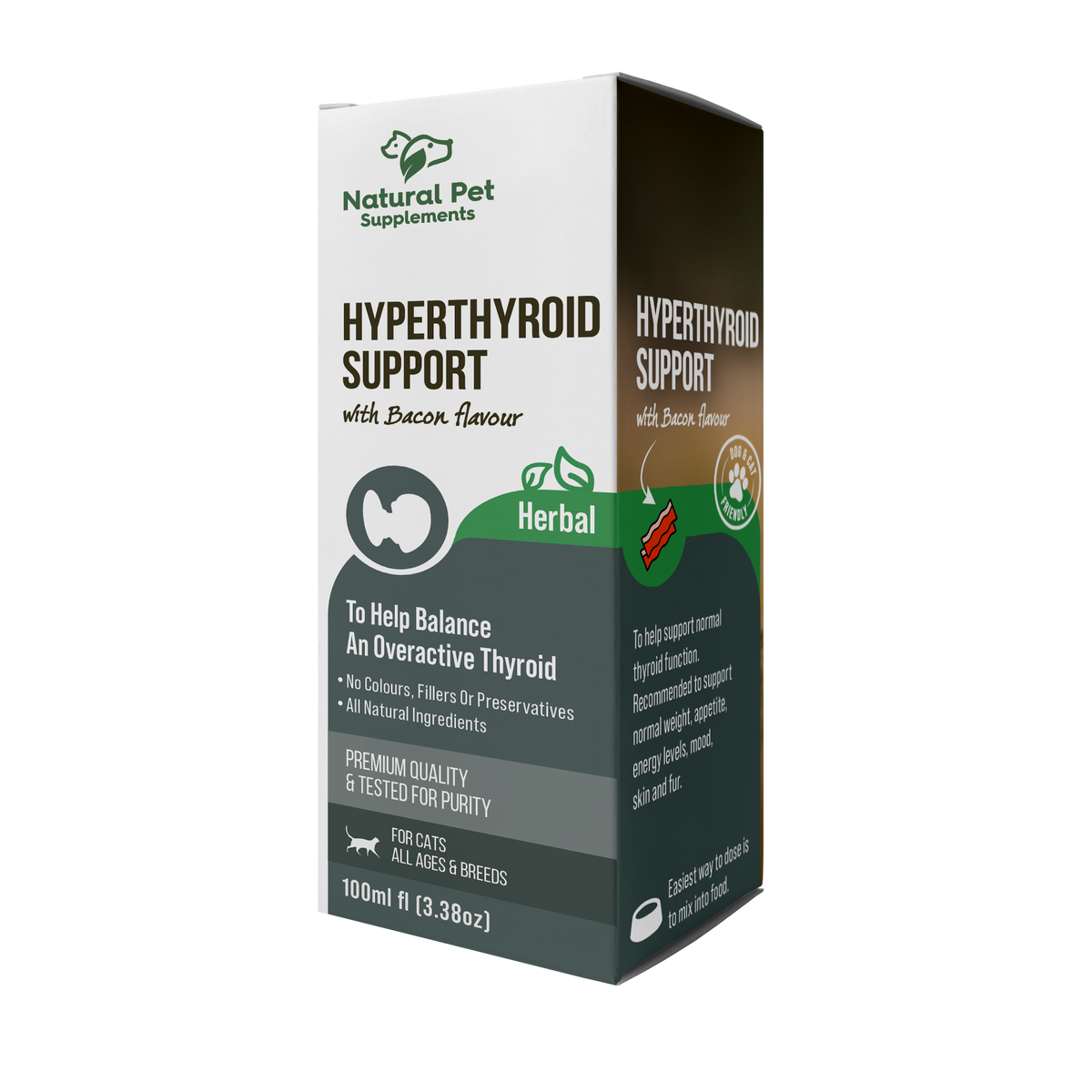
Hyperthyroid Support
A high-strength, low-dose liquid herbal blend with Bugleweed, Lemon Balm, Motherwort, Bupleurum, Withania and Passionflower.
- Supports healthy thyroid and metabolic balance
- Supports a calm, settled nervous system
- Supports normal heart rhythm and cardiovascular wellbeing
- Supports healthy appetite, weight and coat condition
- Supports liver function, resilience and whole-cat vitality
- Australian made with human-grade herbs
A little really does go a long way
How long does one bottle last?
This is one of the questions I get asked most often, and the answer surprises people. Because the formula is concentrated, the dose is tiny. A 100 mL bottle is $69.95 and lasts an average 5 kg cat around 200 days—just over six and a half months.
200
days per 100 mL bottle
35¢
a day for a 5 kg cat
10
drops total per day
| Cat’s weight | Daily amount | Bottle lasts | Cost per day |
|---|---|---|---|
| 4 kg cat | 4 drops twice daily | Approximately 250 days | Approximately 28¢ |
| Average 5 kg cat | 5 drops twice daily | Approximately 200 days | Approximately 35¢ |
| 6 kg cat | 6 drops twice daily | Approximately 167 days | Approximately 42¢ |
Calculated using a $69.95, 100 mL bottle and approximately 20 drops per mL. Actual duration varies slightly with drop size, your cat’s weight and the recommended serving. Cats weighing 3 kg or less receive two drops twice daily.
The traditional herbal wisdom behind the formula
Herbal medicine has never been about choosing six fashionable ingredients and putting them into one bottle. Traditional formulation looks at the pattern of imbalance and asks what the whole body needs.
Bupleurum brings thousands of years of Chinese herbal knowledge. Withania comes from the ancient Ayurvedic tradition of India. Bugleweed, Lemon Balm, Motherwort and Passionflower have deep roots in Western and European herbal practice. I brought these traditions together because their roles complement one another beautifully: thyroid balance, nervous-system calm, heart support, healthy liver processing, stress resilience and restorative sleep.
WHY TRADITIONAL USE MATTERS
Published research helps us understand individual mechanisms, but the formula begins with generations of herbal knowledge. The herbs were selected for their traditional actions, the way they strengthen and balance one another, and my experience formulating for animals. Modern research supports that logic—it does not replace it.
Bugleweed (Lycopus spp.)
Bugleweed is one of Western herbal medicine’s most respected herbs for an overactive thyroid pattern. European herbalists have traditionally selected it when excess thyroid activity is accompanied by heat, agitation, tremor, a racing heart or a sense that the whole body is running too quickly.
Its value is twofold: it is traditionally thyroid-modulating and also calming to the cardiovascular and nervous systems. That makes it an especially logical herb when excessive metabolic drive is affecting behaviour, heart rate and comfort at the same time.
Why I added it: Bugleweed is the direct thyroid-balancing foundation of Hyperthyroid Support. I chose it to help moderate excessive thyroid activity while supporting a more settled heart rate, temperature and nervous system.
Modern research has explored Lycopus for its influence on thyroid-hormone pathways and the cardiovascular signs associated with excess thyroid activity. Explore the research.
Lemon Balm (Melissa officinalis)
Lemon Balm has been cherished in European herbal medicine for more than a thousand years. Traditionally called a gladdening herb, it was used for nervous tension, digestive upset, restlessness, sleeplessness and a heart made fluttery by anxiety or overstimulation.
Within thyroid herbal practice, Lemon Balm is particularly valuable because it sits between two worlds: it supports thyroid balance while soothing the anxious, unsettled nervous system that often accompanies an overactive metabolism.
Why I added it: I chose Lemon Balm to work beside Bugleweed on thyroid balance while helping a restless, vocal or irritable cat feel calmer. It also offers gentle digestive support when stress and a fast metabolism are contributing to loose stools or nausea.
Laboratory research has investigated Melissa officinalis in relation to TSH-receptor signalling, while broader research supports its traditional calming role. Explore the research.
Motherwort (Leonurus cardiaca)
Motherwort has a long history in European herbal medicine as a herb for the nervous heart. Even its botanical name, cardiaca, tells us how strongly it has been associated with cardiovascular support.
Traditional herbalists use Motherwort when the heart feels fast, forceful or irregular, particularly when that cardiovascular tension is linked with nervousness, heat and restlessness. It is a beautiful example of a herb supporting two connected systems at once.
Why I added it: Excess thyroid hormone can push a senior cat’s heart very hard. I included Motherwort to support normal heart rhythm and cardiovascular comfort while complementing the calming effects of Lemon Balm and Passionflower.
Research has examined Motherwort’s antioxidant constituents and their actions within heart-cell energy systems. Explore the research.
Bupleurum root (Bupleurum falcatum)
Known as Chai Hu, Bupleurum has been used in Traditional Chinese Medicine for well over two thousand years. It is one of the great harmonising herbs—traditionally chosen when the body appears stuck between states, under chronic strain or unable to regulate itself smoothly.
Bupleurum is also closely associated with the traditional Liver system and the healthy movement of Qi. In modern whole-body terms, that makes it relevant to resilience, hormone processing, antioxidant protection and the burden placed on the liver during prolonged metabolic overactivity.
Why I added it: I chose Bupleurum to give the formula a deeper harmonising and liver-supportive layer. It helps the body manage the wider metabolic effects of hyperthyroidism rather than focusing only on the thyroid gland.
Modern research has explored Bupleurum in models of excess thyroid activity, oxidative stress and liver strain. Explore the research.
Withania root (Withania somnifera)
Withania, also known as Ashwagandha, comes from Ayurveda—India’s traditional system of medicine with a history stretching back thousands of years. It is a classic rasayana, or rejuvenating herb, traditionally used to build resilience, nourish a depleted body and help it adapt to ongoing physical and emotional stress.
A hyperthyroid cat can be both wired and exhausted: restless on the outside while losing muscle, strength and reserves underneath. This is exactly where an adaptogenic herb belongs—not as the main thyroid herb, but as a small balancing component supporting the stress response and vitality.
Why I added it: I use Withania in a small amount to support the adrenal stress response, healthy energy and resilience. It helps balance the more directly thyroid-focused herbs and supports the depleted senior cat behind the overactive symptoms.
Modern clinical research has examined Withania’s adaptogenic effects, including its influence on perceived stress and cortisol. Explore the research.
Passionflower (Passiflora incarnata)
Passionflower has a long history in Western herbal medicine as a gentle nervous-system restorative. It is traditionally used when the mind and body cannot switch off—restlessness, agitation, nervous tension and broken sleep.
That matters enormously in feline hyperthyroidism. A cat that is pacing, calling out, demanding food and unable to sleep is not simply “being difficult”; their nervous system is being driven by an overactive metabolism. The cat needs comfort while the deeper thyroid work takes place.
Why I added it: I chose Passionflower to help the cat settle, rest and sleep more normally. It softens the whole formula and works beautifully beside Lemon Balm and Motherwort for nervous-system and cardiovascular calm.
Research has investigated Passionflower’s calming and sleep-supportive actions through several neurotransmitter pathways. Explore the research.
How the six herbs work together
I did not create this formula by looking for one herb to “fix” one T4 result. I looked at the whole hyperthyroid pattern and the way each herb could strengthen or balance the others.
| Formula role | Herbs contributing |
|---|---|
| Traditional thyroid balance | Bugleweed and Lemon Balm |
| Heart rhythm and cardiovascular support | Motherwort, Bugleweed and Lemon Balm |
| Nervous-system calm and sleep | Passionflower, Lemon Balm and Motherwort |
| Liver, hormone-processing and antioxidant support | Bupleurum |
| Stress resilience and depleted vitality | Withania and Bupleurum |
WHY A BLEND?
Bugleweed and Lemon Balm form the thyroid-balancing centre. Motherwort protects the heart, Passionflower settles the nervous system, Bupleurum supports healthy liver processing and Withania helps the depleted body cope with chronic metabolic stress. Together, they support the thyroid and the cat living with it.
Real before-and-after thyroid results
Symptoms matter, but repeat blood testing shows us what is happening beneath the surface. These are the real comparison results published on the Hyperthyroid Support page and in a verified customer review.
| Patient | Before | After Hyperthyroid Support | Timeframe |
|---|---|---|---|
| Kito the cat | T4 above 8 | T4 of 6 | 4 weeks |
| Belle, an 8 kg French Bulldog | TT4 57 nmol/L—high | TT4 40 nmol/L—normal | 2 weeks at 8 drops twice daily |
Kito’s family described the change as undeniable, while also recognising that his result was not yet normal. Belle is a dog—not a cat—and hyperthyroidism is unusual in dogs. I have included her because these are her actual veterinary laboratory reports, not a stock image or a made-up example.
Belle’s actual veterinary blood-test reports
From 57 to 40 nmol/L in 14 days
Belle is a two-year-old, 8 kg female French Bulldog. Her laboratory’s TT4 reference interval was 13–51 nmol/L. With veterinary guidance, she received 8 drops twice daily, and her repeat result moved from above the reference range to within it.
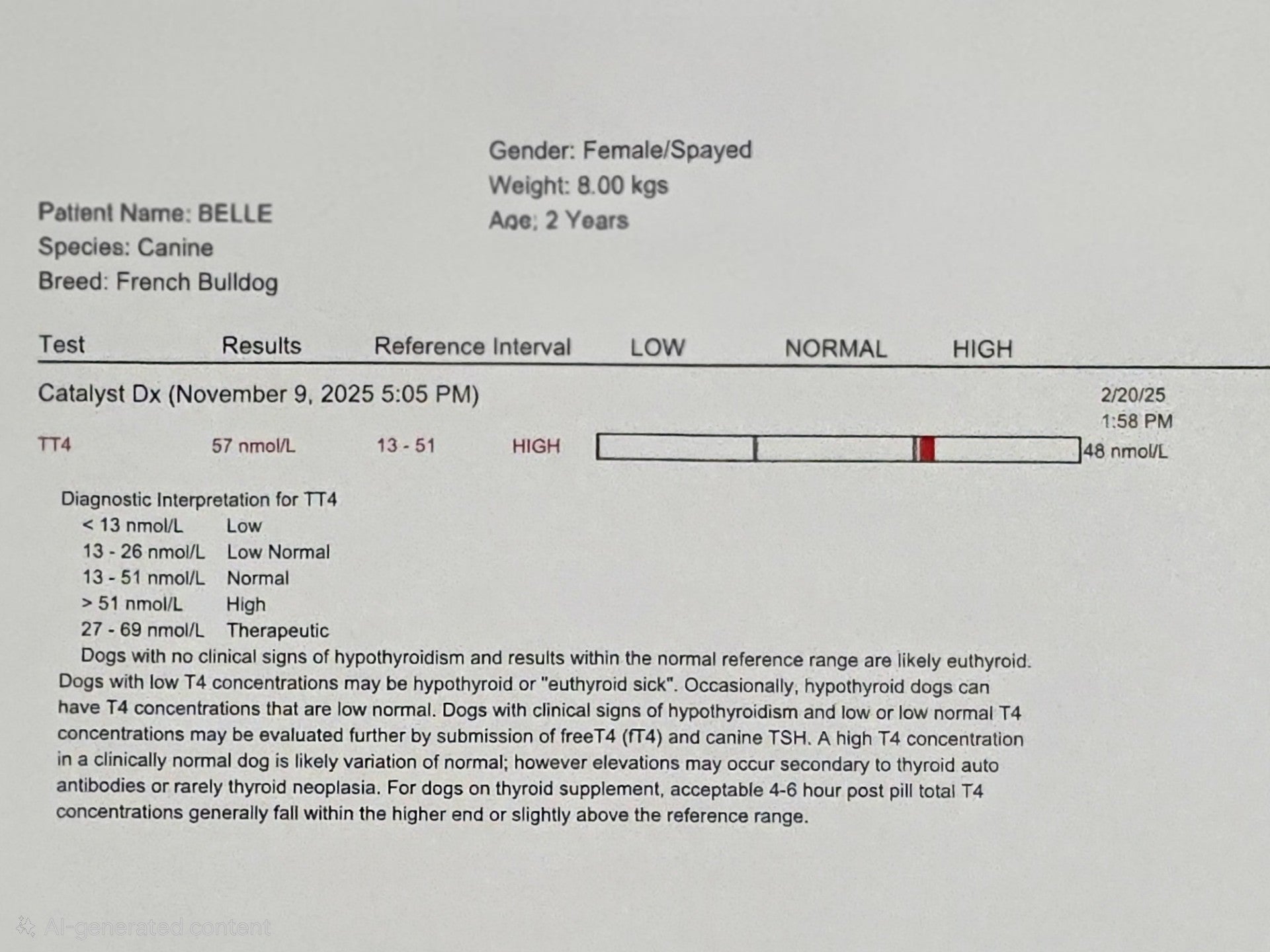
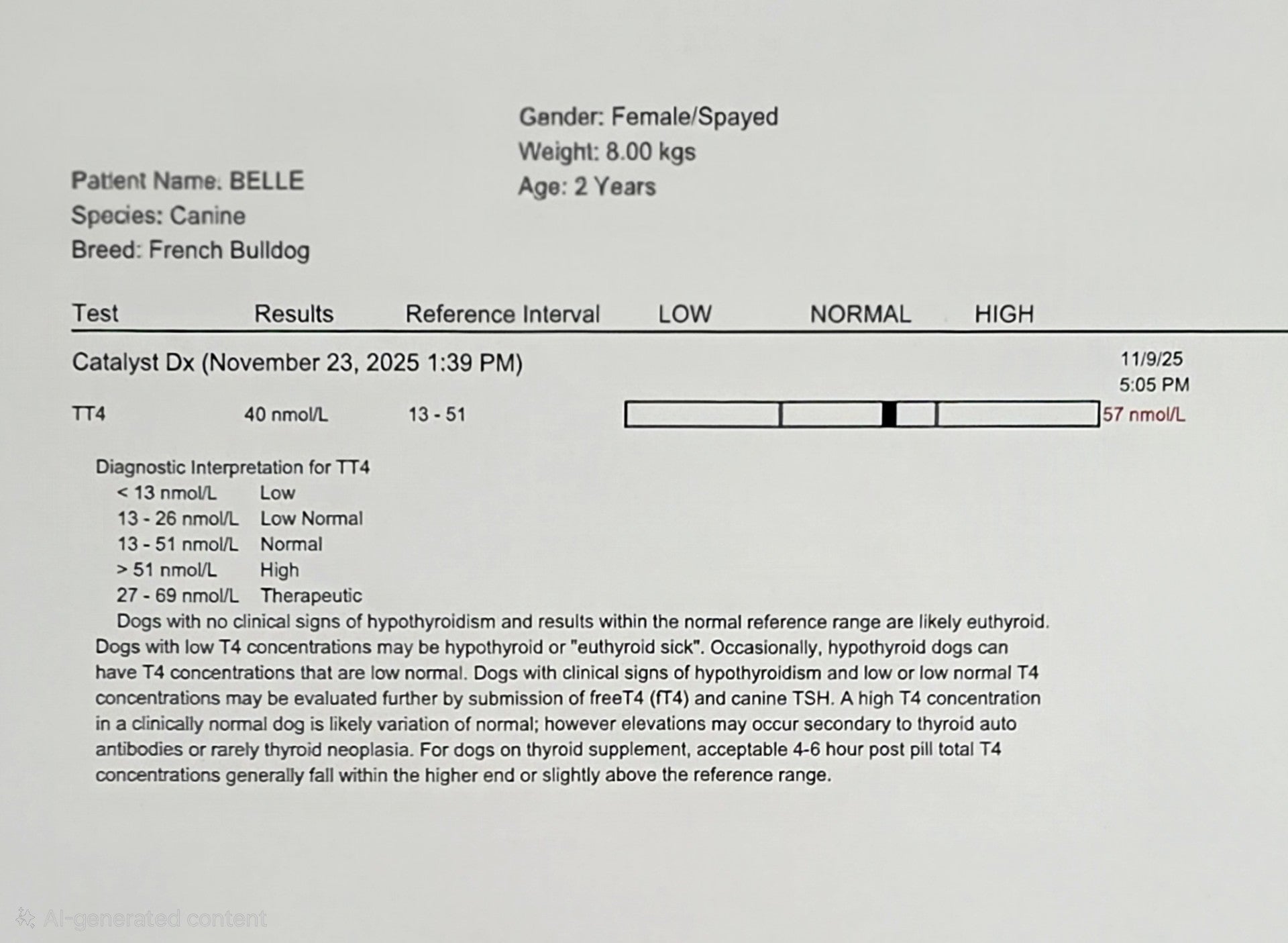
A quick note from me: Belle is a dog, so her report cannot tell us what any individual cat’s results will be. This is one animal’s experience, not a guarantee, and every thyroid case needs its own veterinary monitoring.
WHAT THE RESULTS TEACH US
Use the same laboratory where possible, keep copies of the reports and interpret the number alongside weight, appetite, heart rate, kidney function and behaviour. Laboratory units and reference ranges differ, so the trend and the veterinarian’s interpretation both matter.
Real cats, real experiences
These genuine reviews come from people using Hyperthyroid Support with their cats. They describe the changes they noticed in coat, weight, energy, calmness, vomiting and everyday quality of life. The photographs are from our own Hyperthyroid Support product collection; individual reviewers did not supply a matching photograph of their own cat.


★★★★★
“My cat Kito T4 levels went from above 8 to 6 in 4 weeks. Not yet normal but the improvement is undeniable.”
Laura B · Verified review · Hyperthyroid Support
How to use Hyperthyroid Support
- Shake well before use.
- Give twice daily: one drop for every 1 kg of body weight. Cats weighing 3 kg or less receive two drops twice daily.
- Mix the drops into a teaspoon of favourite wet or fresh food first. Once that small portion is eaten, serve the rest of the meal.
- Give at consistent times each day. The two daily doses may be combined into one meal if that is easier for your cat.
- If your cat is sensitive to new flavours, introduce a smaller amount and work gradually toward the full dose.
- Record weight, appetite, calmness, sleep, vomiting, thirst and coat condition each week.
- Arrange repeat T4, kidney, liver and blood-pressure monitoring with your veterinarian.
SAFETY FIRST
Do not use Hyperthyroid Support with pharmaceutical medication for hyperthyroidism or with blood-pressure medication. It is not suitable for an underactive thyroid. Use caution with blood-thinning medication and diabetes, and discontinue before surgery or anaesthesia as directed by your veterinarian. Ongoing thyroid, kidney and blood-pressure monitoring is essential.
Frequently asked questions
Can herbal medicine help a cat with hyperthyroidism?
Yes, targeted herbal medicine can support healthy thyroid balance while also caring for the nervous system, heart, liver, stress response, appetite and vitality. The best results come from using a purposeful formula consistently and monitoring the cat with repeat blood tests, weight checks and veterinary examinations.
Can I give Hyperthyroid Support with methimazole or carbimazole?
No. Hyperthyroid Support must not be combined with pharmaceutical hyperthyroid medication. If your cat is currently taking medication and you want to explore a herbal approach, speak with your veterinarian before making any change and arrange an appropriate monitoring plan.
How soon should I repeat the T4 blood test?
Your veterinarian will choose the appropriate interval based on the starting result, clinical signs and the cat’s other health conditions. Changes may be noticed at home before the full bloodwork effect is visible. Consistent monitoring over the first weeks and months is important.
Why is my hyperthyroid cat always hungry?
Excess thyroid hormone accelerates metabolism, so calories are burned very quickly. The cat may feel constantly hungry while continuing to lose weight and muscle. Several small, complete, protein-rich and moisture-rich meals can help while the thyroid imbalance is being addressed.
Why is my cat restless and crying at night?
An overactive metabolism can overstimulate the nervous system, disturb sleep and make a cat feel hot, hungry or unsettled. A predictable evening routine, a small bedtime meal, a quiet warm sleeping area and the calming herbs in the formula can all form part of the support plan.
Can hyperthyroidism affect the heart?
Yes. Excess thyroid hormone can increase heart rate and the force of contraction, and over time may contribute to changes in the heart muscle. Blood pressure can also rise. This is why Motherwort and the other calming herbs are important within the formula—and why rapid breathing, collapse or a very fast heartbeat needs veterinary attention.
Can hyperthyroidism hide kidney disease?
It can. Increased blood flow may make kidney filtration appear stronger while the thyroid is overactive. As thyroid values become better controlled, underlying kidney disease may become more apparent. Monitor thyroid and kidney values together.
What if my cat does not like the taste?
Mix the drops into a very small amount of a favourite wet food, sardine or other suitable high-value food so you can see that the full dose has been eaten. Introduce it gradually over several days if needed, then offer the rest of the meal separately.
How long will a bottle last my cat, and what does it cost per day?
For an average 5 kg cat, the serving is five drops twice daily. A 100 mL bottle provides approximately 200 days of support, so at $69.95 it costs about 35 cents a day. A smaller 4 kg cat uses four drops twice daily, making the same bottle last about 250 days at approximately 28 cents a day.
Supporting the whole hyperthyroid cat
A hyperthyroid cat is not simply a high T4 result. They may be hungry, anxious, thirsty, sleep-deprived, losing muscle and asking their ageing heart and kidneys to work much harder than they should.
That is why I believe in a whole-cat approach. We monitor the blood tests, but we also nourish the body, protect hydration, create calm, rebuild condition and choose herbs that work together across the thyroid, heart, liver, nervous system and stress response.
With consistent support and close monitoring, many cats can feel calmer, brighter and more like themselves again.
Support the thyroid. Calm the nervous system. Care for the whole cat.
Explore the traditional herbal formula created specifically for cats needing thyroid, heart and nervous-system support.
Shop Hyperthyroid SupportGeneral information only: This article does not diagnose disease and is not a substitute for veterinary care. Feline hyperthyroidism can affect the heart, blood pressure and kidneys. Always seek veterinary advice for diagnosis, worsening symptoms, medication decisions and ongoing blood-test monitoring. Individual results may vary.

About the author
Hi, I’m Erin Follington
Small Animal Naturopath · Founder of Natural Pet Supplements
I started out as a naturopath working with people, but everything changed when my Labrador, Taco, struggled with ongoing skin allergies. Helping him led me back to study, where I completed a further three years in small-animal naturopathy.
Now, with more than nine years of experience, I hand-blend our herbal formulas here in Perth, Western Australia. Over the past six years, I’ve helped more than 8,500 dogs and cats—and I still believe the best care starts with looking at the whole animal, not just the diagnosis.
Read more about me and Natural Pet Supplements


